


 chargement...


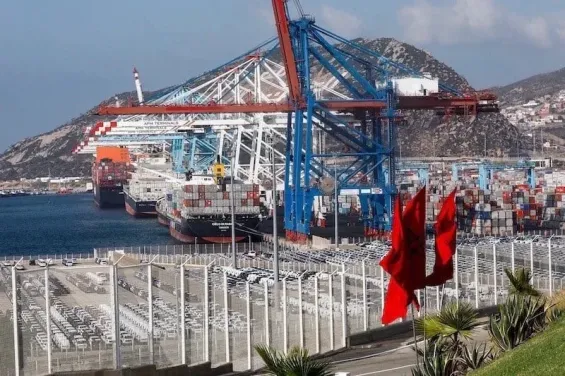
In a recent report on Morocco, the Stimson Center said the kingdom entered 2026 as a pivotal bridge between Europe, Africa, and the Mediterranean, leveraging industrial policy, trade integration, and strategic diplomacy to reposition itself as a rising middle power.
The independent, nonpartisan U.S. research center, based in Washington, said Morocco has, in recent years, succeeded in cementing its place within global supply chains thanks to progress in the automotive, critical minerals, and renewable energy sectors. This, the report noted, reflects a shift toward higher value-added economic integration. It also highlighted the kingdom’s ambitious social and digital reforms, designed to ensure the long-term sustainability of growth.
On migration, the report stressed that Morocco is no longer merely a buffer state for managing European migration flows, but has become a proactive regional actor and an anchor of stability at the crossroads of Europe and Africa. It added that the kingdom has leveraged its geographic position to facilitate trade, investment, and security cooperation across continents, reshaping the strategic architecture of the Maghreb through what analysts describe as «strategic transactionalism», a foreign policy approach based on carefully aligning interests to secure diplomatic and economic support in exchange for cooperation on shared priorities.
The report noted that Morocco has evolved from a low-cost manufacturing platform into a high-tech industrial exporter, a leader in green energy, and an emerging hub for battery materials. It said the kingdom, now Africa’s largest car manufacturer and home to vast phosphate reserves, has also strengthened its position as a reliable player in renewable energy.
At the same time, the report warned that Morocco faces major challenges, including unprecedented water scarcity, high youth unemployment, the expansion of the informal economy, and the continued geopolitical stalemate over the Sahara issue, which continues to weigh on several dimensions of the kingdom’s foreign policy.
Economic transformation, social consolidation, and diplomatic repositioning
The report argued that Morocco’s current trajectory is shaped by three interlinked dynamics. The first is economic transformation. According to the report, the rise of integrated export ecosystems in the automotive, aerospace, and critical minerals sectors has strengthened Morocco’s position within global supply chains and attracted sustained European and Gulf investment, amid a growing Western push to reduce dependence on Chinese supply chains.
The second dynamic is social consolidation. The report described the social protection reform launched in 2021, centered on the universalization of health coverage and family allowances, as one of the most ambitious domestic policy initiatives in recent decades, although its financial sustainability remains tied to continued revenue growth and the creation of structural employment opportunities.
The third dynamic, the report said, is Morocco’s diplomatic repositioning, particularly following the signing of the Abraham Accords in 2020 and the adoption of the 2025 United Nations Security Council resolution centered on Morocco’s autonomy proposal for the Sahara.
In its conclusion, the Stimson Center said Morocco’s success in achieving the goals of «Vision 2035», a strategy aimed at delivering inclusive and sustainable growth through 2035, will depend on its ability to maintain economic momentum, create jobs for young people, address climate and water challenges, and ensure more inclusive development.
It added that Morocco’s strategic location, political stability, and reform momentum make it a key actor in North Africa and a bridge between continents, stressing that how the kingdom navigates the complex challenges ahead will determine whether it can transform its progress into broad-based prosperity and greater long-term resilience.





 Fil Info