


 chargement...


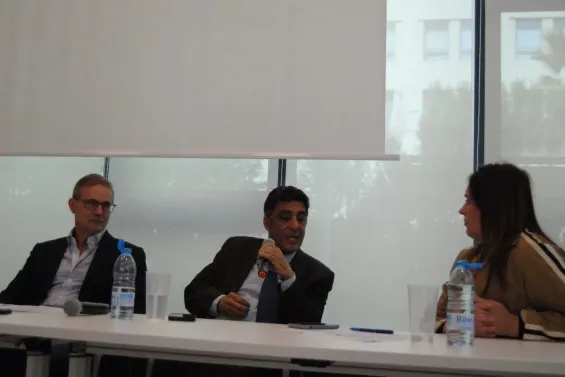
For more than a quarter of a century, Mohamed Alami, president of the Association of Friends of the Moroccan People in Spain ITRAN, "La asociación de amigos del pueblo Marroquí ITRAN", has pursued a civic path he chose to turn into a bridge between the two shores of the Mediterranean, with the aim of contributing to Morocco’s development from his position as a migrant who settled in Spain as a child.
Born in 1964, Alami moved with his family to Barcelona in 1967, where he completed his primary, secondary, and higher education before building a professional career within Spain’s local administration. He comes from a family of six siblings, "all of whom have managed to build successful professional careers within institutions and administrations," while remaining modest and far from the spotlight.
.jpg)
Despite his many years of stability in Spain, his bond with Morocco has remained strong. He considers the key turning point in his journey to have come between 1999 and 2000, when he responded to the call of Moroccan ambassador Abdessalam Baraka, who toured different parts of Spain urging members of the diaspora to contribute to their homeland’s development and support national projects. From that moment on, Alami decided to turn that appeal into tangible initiatives on the ground.
"There can be no progress without women’s education"
Under a slogan he sees as the foundation of any social renaissance — "there can be no progress without women’s education" — the Association of Friends of the Moroccan People, which he chairs, launched programs to support girls’ schooling in rural areas. Each year, the association provides aid to purchase schoolbags, supplies, shoes, and other essentials needed to continue studying. Thanks to these initiatives, hundreds of girls have been able to stay in school and reach university.
The association’s work has not stopped at education. It has also expanded into economic empowerment projects for widows, divorced women, and single mothers, "by helping them set up their own businesses. We are currently working on a project to provide them with sheep so they can secure a stable income and live off raising their own flocks."
The initiatives launched by the association have also included projects to provide drinking water and improve school transport in rural areas. He notes that "one of the most prominent of these projects was an attempt to donate 17 school buses to rural communes in the province of Midelt. However, the project ran into major administrative obstacles."

"In recent years, the association has broadened its focus to include healthcare, particularly after the royal appeal to support the national health system. Thanks to the network of relationships the association has built in Spain, contact was established with hospitals that expressed their willingness to contribute to medical projects in Morocco. These efforts culminated in the signing of a partnership agreement between the Ministry of Health, the Provincial Council of Midelt, and the association."
Alami said that "the first phase of the project focused on monitoring patients with cardiovascular disease, diabetes, and other chronic illnesses, with 93 patients benefiting from a system of coordination and joint follow-up between Midelt Hospital and a partner hospital in Barcelona." Later, the association sent around 15 dentists to the Tounfite area as part of a project aimed at improving oral and dental health among the local population, before extending it to the rest of Midelt province and then the Tafilalet region. However, according to Alami, the medical team was surprised by the absence of the infrastructure and equipment needed to carry out the program as planned.
Independence as the key to success
He points out that despite these constraints, "the caravan managed to provide services to more than 400 people, although the interventions were limited to emergency care and tooth extractions." Alami recalls that phase as an experience that revealed the scale of the challenges facing field-based health projects, while also highlighting the importance of support from local authorities in ensuring the success of social initiatives.
Alongside his civic work, Alami does not hide his critical views on a number of issues linked to development and investment. He believes that encouraging Moroccans living abroad to invest in their country "depends on improving the performance of the administration, strengthening the fight against corruption, and simplifying procedures," noting that many members of the second and third generations of the diaspora have become hesitant even to buy property in Morocco because of concerns related to the administrative climate.
Regarding the Moroccan community in Europe, Alami voices concern over certain indicators he considers worrying, such as "weak integration, school wastage, and rising dropout rates." He believes that some of these problems are "linked to the weakness of civic action and the fragmentation of initiatives," calling for "greater coordination and joint action to defend the rights of the diaspora and strengthen its presence within European societies."

Throughout his career, Alami says he has received numerous offers to take up political posts, but chose to remain independent in order to preserve his freedom of decision and the autonomy of his civic work. He also takes pride in the fact that the association he leads has never benefited from public financial support, relying since its creation on self-financing and private donations.
He believes that "this independence has been one of the secrets behind the association’s continuity," especially during periods of economic crisis that led to the closure of many associations. For this reason, he advocates "a civic model based on self-initiative and on directing resources straight to beneficiaries rather than consuming them in administrative expenses."



 Fil Info