


 chargement...


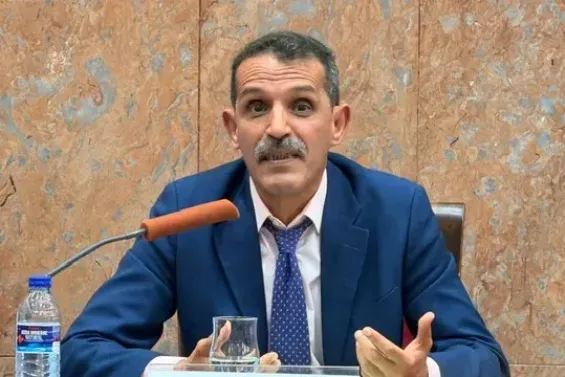
Why has Prime Minister Pedro Sánchez's government decided to back Spanish nationality for Sahrawis after years of deadlock?
The announcement made by Foreign Minister José Manuel Albares before the lower house of the Spanish Parliament on Wednesday, June 24, that the government supports a bill granting Spanish nationality to Sahrawis born before February 1976 is far from coincidental.
It comes at a time when diplomatic efforts to reach a political settlement of the Sahara issue are regaining momentum. A solution based on autonomy under Moroccan sovereignty requires not only public initiatives but also more discreet measures that can help facilitate its implementation. United Nations Security Council resolutions, particularly Resolution 2797, adopted on October 31, 2025, provide the political framework. But diplomacy also has other tools at its disposal to support and consolidate a negotiated solution.
In this regard, it is worth recalling that several years ago Mauritania granted citizenship to Sahrawis living both in the Tindouf camps and on Mauritanian territory.
Who stands to benefit most from this decision?
Morocco has no particular issue with the naturalization of Sahrawis. It is worth remembering that the Southern Provinces are already home to a significant number of Sahrawis who hold Spanish nationality. The presence of dual nationals has never posed a problem for the kingdom.
Spain also has a clear interest in seeing this proposal succeed. Madrid views the future of the Southern Provinces under an autonomy-based solution as a strategic issue. The region's abundant resources, its proximity to the Canary Islands, and the presence of Spanish nationals all help safeguard Spain's long-term interests.
The measure could also bring demographic and economic benefits. Spain is grappling with an aging population and labor shortages across several sectors. The orderly integration of new citizens could help support demographic growth while easing pressure on the country's pension system.
From that perspective, Spain appears to be the primary beneficiary of this initiative.

And who stands to lose?
The main loser would be the Algeria-Polisario axis. Both parties reacted to José Manuel Albares's announcement with striking silence. Algiers issued no statement welcoming the Spanish parties behind the proposal, while the Polisario ignored it altogether.
Granting Spanish nationality to Sahrawis does not serve the Polisario Front's interests. Its narrative rests on its claim to be the «sole legitimate representative of the Sahrawi people», a position that could be weakened by such a measure. The movement also fears losing its grip on the population of the Tindouf camps, particularly those most directly concerned by the Sahara issue.
What impact could this bill have on the population of the Tindouf camps?
Much will depend on the final version of the legislation. If Parliament adopts a broad approach, extending Spanish nationality not only to Sahrawis who lived under Spanish administration but also to their children and grandchildren, the impact on the Tindouf camps could be significant.
Conversely, if lawmakers opt for stricter eligibility criteria, the number of beneficiaries will be more limited and the measure's impact relatively modest.
Those directly concerned by the conflict account for only around 10% of the camps' population. The majority of residents originate from Algeria's Saoura region, northern Mauritania, Mali and other Sahel countries.




 Fil Info