


 chargement...


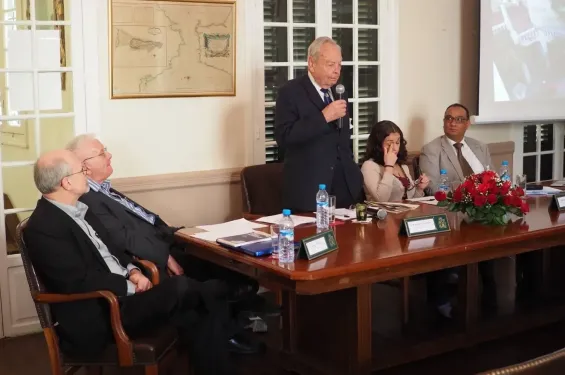
Dating back over 200 years, the American Legation in Tangier is the oldest U.S. government building outside the United States. It was gifted to the American government in 1821 by Sultan Moulay Slimane (1792–1822) and has since served as an embassy, consulate, ambassador’s residence, and, later, a museum and cultural center. As the only U.S. National Historic Landmark located abroad, it has, for over three decades, been a hub of scholarship and cultural exchange between Morocco and the United States, thanks in large part to academic Ira William Zartman, who chaired the Legation’s board for more than 25 years.
Following Professor Zartman’s death in Maryland in July 2025 at the age of 93, the institution paid tribute to his pivotal role as a founding member of the Tangier American Legation Institute for Moroccan Studies (TALIM). Zartman first led the conflict management and African studies programs at Johns Hopkins University’s School of Advanced International Studies (SAIS), where he later became a professor. He held the Jacob Blaustein Chair in International Organizations and Conflict Resolution and also founded and chaired the International Peace and Security Institute (IPSI).
A Personal Journey Between the U.S. and Morocco
Long before his academic achievements, Zartman had personal ties to Morocco, having served in the U.S. Navy. In 1949, the Tangier Legation became one of the first American diplomatic posts to host a U.S. Marine Security Guard. In the late 1950s, while stationed in Kenitra, a city known for its U.S. military base, Zartman met his future wife, Marie-Danièle, a Frenchwoman from Caen, Normandy. They were married by a Moroccan caïd in 1960, with a religious ceremony later held in France.

In a 2013 article, Marie-Danièle Zartman described her husband’s growing connection to the country: «During his service in Kenitra, [William] met two young Moroccan officers from the first class of officers graduated after Morocco's independence». According to her, it was «thanks to them» that he developed «even more understanding of the country he loved so much».
Marie-Danièle, an emeritus professor at SAIS and herself a board member at TALIM for 25 years, wrote about their immersion in Morocco: «Our Moroccan officer friends took us on our most adventurous and fun experiences». One such experience was a trip through a sandstorm to Azzi Tan Tan to attend a military celebration welcoming King Hassan II. «To our great surprise, we were the guests of honor: we arrived at the base, but not the king, as his plane couldn't land!» she recalled.
A Meeting Place for Scholars from the U.S. and North Africa
The couple later lived in Rabat for two years before returning to the U.S., where William Zartman continued to teach and write on international relations, Africa, and the Middle East. He joined the faculty at the University of South Carolina and, after several publications, returned to the continent to conduct research for his 1966 book «International Relations in the New Africa», followed by «The Weak Confront the Strong: The Politics of Trade Negotiations between Africa and The European Union Community» (1971), which explored trade negotiations between Africa and the European Community.
This body of work propelled Zartman into the field of negotiation analysis, where he made lasting contributions. At New York University, he became the founding executive secretary, and later president, of the Middle East Studies Association. He also helped establish the American Overseas Research Center (AORC) in North Africa, which brought together American and Maghreb researchers. Zartman chaired the founding committee of the American Institute for Maghreb Studies (AIMS), the first AORC to serve an entire region.

In 1976, Zartman joined the board of the former American Legation in Tangier. That year, the building was leased to the Tangier American Legation Institute for Moroccan Studies (TALIM), which manages the site as a museum, library, and cultural hub. Zartman chaired TALIM for 27 years, while continuing his academic work, including a stint as head of the political science department at NYU.
His work also extended to Europe, where he collaborated with scholars on conflict transformation following U.S.-Soviet détente. He was a founding member of the Processes of International Negotiation (PIN) group and published extensively within that framework. One of his last works, «Rethinking Conflict Resolution and Management» (2023), showcased his continued innovation.
A Lifelong Connection to Morocco
Zartman’s connection to the American Legation remained strong, as the site came to embody the evolving relationship between Morocco and the United States. Far from an ivory tower, the Legation became a space for education, research, and culture. It hosts literacy and job training programs for women, academic seminars, and cultural events for locals and visitors alike.
Over time, the Legation has become a living archive of U.S.-Morocco ties. It houses the personal documents and recordings of American writer and musicologist Paul Bowles, who lived in Tangier for 52 years. It also celebrates Sephardic Jewish heritage and features Moroccan authors who made their mark in the U.S.
_1.jpg)
Reflecting on this deep connection, Marie-Danièle Zartman wrote: «Many years have passed, and life has resumed its course», referring to the couple’s eventual return to Morocco. «In 1987, still involved in his profession and passion in Morocco, [William] became president of TALMS, now TALIM, and devoted much energy, time, and organization to this beautiful place».
Known for introducing the concepts of «maturity theory» and «mutually hurting stalemate», Zartman believed in the power of scholarship to foster dialogue and understanding. His work helped build bridges between Morocco and the United States, not just diplomatically, but intellectually and culturally.
In recognition of his legacy, Zartman was awarded the Ouissam Alaouite, one of Morocco’s highest honors. In 2000, King Mohammed VI personally presented him with the decoration for his contributions to bilateral relations and academic exchange.
In 2024, the American Legation in Tangier was listed among the National Trust for Historic Preservation’s «11 Most Endangered Historic Places», prompting a new commitment to preserve this unique symbol of U.S.-Morocco friendship.



 Fil Info