


 chargement...


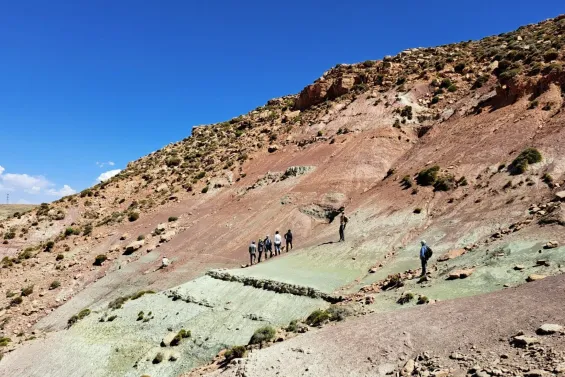
A group of Moroccan researchers has uncovered the fossilized footprints of one of the rarest lizard-like animals dating back 160 to 170 million years in Morocco. Published on April 20 in the peer-reviewed journal Historical Biology, the study analyzes footprints found in Msemrir (Tinghir Province), identifying a lacertoid species related to modern-day lizards.
The discovery is particularly significant due to its rarity, Abdelouahed Lagnaoui, professor of paleontology at the Higher School of Education and Training in Berrechid (Hassan I University), told Yabiladi. Lagnaoui is also part of the research team behind the study.
«The discovery was made by one of my PhD students, Omar Ait Haddou, from the Faculty of Sciences Dhar El Mahraz at Sidi Mohamed Ben Abdellah University in Fez», he said, noting that it forms part of the student’s doctoral research.

The Msemrir discovery is «only the third known occurrence of such tracks worldwide», Lagnaoui explained, with previous finds reported in Europe and South America. «This is the first time such evidence has been identified in Gondwana, before the supercontinent split into Africa, parts of Europe, and South America», he added.
Until now, scientists believed this type of lacertoid was confined to Europe and South America, making this discovery a key piece that completes our understanding of its historical distribution.

Researchers identified 12 fossilized footprints, some clearly showing five digits, confirming the animal’s lacertoid nature, Lagnaoui said. Using photogrammetry, the team reconstructed its shape and movement. «The lizard measured 30 to 50 centimeters and had a sprawling, crocodile-like posture», he added.
From a rare discovery to a broader geological legacy
Beyond its scientific importance, this discovery fits into a much larger picture of Morocco’s rich paleontological heritage. The Msemrir site itself has yielded several important finds over the years. «The first discovery was made in 2006 by an Italian researcher, who identified bird traces. More recently, Ait Haddou uncovered footprints of dinosaurs, including theropods, sauropods, and ornithopods, as well as traces of invertebrates», Lagnaoui said.
Morocco is often described by geologists as a «geological paradise» due to its exceptional diversity. According to Lagnaoui, this is largely due to the country’s geological formations, which span from the Precambrian era, over two billion years ago, to the present day.
«This diversity, combined with Morocco’s position as a historical crossroads for animal migration, has resulted in an extraordinary fossil record», he explained.

In ancient times, Morocco served as a major corridor for wildlife exchange. «During periods when other regions were mountainous, Morocco’s relatively flat landscapes facilitated movement», he added. Many animals passed through the region, and some died there, «leaving behind fossils and footprints that explain today’s richness in paleontological remains».
The professor points to several major discoveries, including Spinosaurus in the Kem Kem region, Ankylosaurus in the Middle Atlas, and Stegosaurus and Atlasaurus in the Beni Mellal area. «Sites like Kem Kem are particularly rich because they once hosted a large lake, attracting both herbivores and predators and creating complete ecosystems», he said.
Preserving a rich heritage
However, this heritage remains undervalued in some regions. In southeastern Morocco, «fossils are often sold by locals due to a lack of awareness of their scientific and cultural value», Lagnaoui noted, stressing that preserving this heritage could support not only scientific research but also the development of geotourism.
A striking example is the discovery of a 588-million-year-old shark, Maghriboselach. «Following its publication, around 120 international researchers visited Morocco in 2026 to see the site», he recalled.
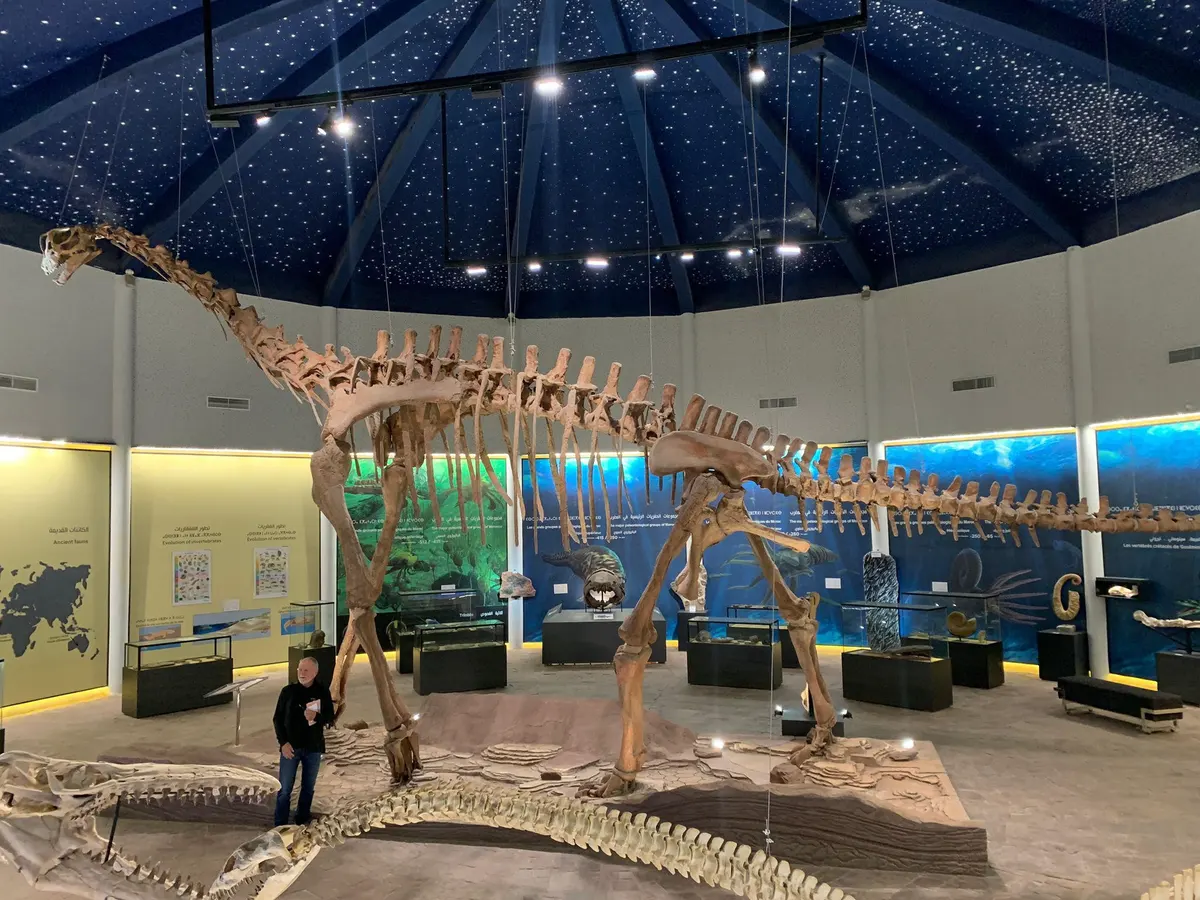
To fully harness this potential, Lagnaoui emphasized the need for greater awareness, starting with education. «Moroccan fossils and geological heritage should be integrated into school curricula, rather than relying solely on examples from abroad», he said. Media coverage also plays a key role, as «even a single article can shift public perception».
He also called for the training of specialized tourist guides and greater investment in local museums. «A major national museum of geology and archaeology is currently under construction in Rabat, expected to open between late 2027 and early 2028», he said, adding that similar initiatives should be developed at the regional level to both preserve this heritage and unlock its scientific and economic potential.





 Fil Info