


 chargement...


In a rapidly shifting regional and international landscape, signs of growing tension are emerging within Algeria’s decision-making circles over the Western Sahara issue. Long considered a cornerstone of Algerian diplomacy, the matter now appears to be undergoing discreet internal reassessments, particularly as recent regional and international developments have begun to erode long-standing positions.
These tensions became more visible following the latest United Nations Security Council session on the MINURSO mission, as well as the recent visit of the U.S. Deputy Secretary of State to the region. Together, these developments exposed an increasingly inconsistent Algerian discourse, contrasting with the unified rhetoric that had long characterized the country’s position.
Unlike his previous media appearances, in which Algerian President Abdelmadjid Tebboune devoted extensive attention and often adopted a confrontational tone on the Western Sahara issue, his latest remarks on the matter were notably brief. He simply stated that “there is a UN process taking its course,” without offering further details.
At the end of last October, the Security Council adopted Resolution 2797, which reaffirmed the autonomy initiative under Moroccan sovereignty as the basis for a political solution to the conflict. The resolution was backed by eleven members, while Russia, China, and Pakistan abstained. Algeria, for its part, chose not to participate in the vote.
This position contrasts sharply with Tebboune’s earlier statements, in which he repeatedly criticized the autonomy proposal and insisted that “self-determination” remained the only solution. He also frequently linked the Western Sahara issue to the Palestinian cause.
Notably, Tebboune’s recent comments received no coverage from Polisario-affiliated media outlets, fueling speculation that they may have caused unease within the separatist front, which relies heavily on Algeria for military and diplomatic support.
Moves in a Different Direction
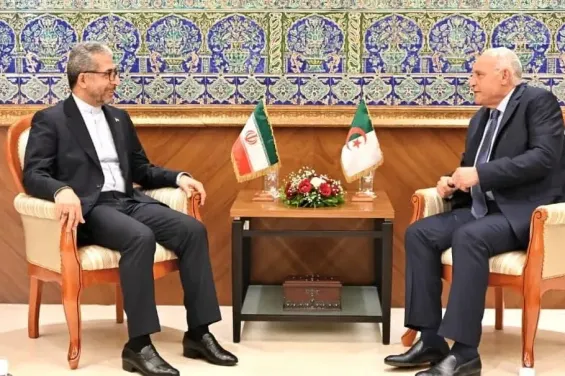
At the same time, parallel diplomatic and field developments have suggested the presence of competing currents within the Algerian establishment. Algerian Foreign Minister Ahmed Attaf held a phone call with his Iranian counterpart Abbas Araghchi and also received the Iranian ambassador in Algiers on the same day, although no details of the discussions were disclosed.
These contacts come as Morocco continues to accuse Iran of supporting and training Polisario fighters through Hezbollah in Lebanon. Against this backdrop, the growing Algerian-Iranian rapprochement is being interpreted as a signal to Washington that Algiers retains alternative strategic options.
On the same day, the Polisario Front targeted the city of Smara with three projectiles. The group later claimed responsibility for the attack in a statement issued hours afterward. The incident injured one woman but caused no material damage.
In another sign of resistance within segments of the Algerian establishment to perceived U.S. pressure aimed at resolving the conflict, the Azawad Liberation Front, known for its close ties to Algeria, alongside the al-Qaeda-linked Group for the Support of Islam and Muslims, launched attacks across large areas of northern Mali several weeks ago, reportedly advancing toward Bamako and seizing several towns. The escalation came shortly after Mali withdrew its recognition of the self-proclaimed “Sahrawi Arab Democratic Republic.”
Through such moves, Algeria appears intent on signaling to Washington that it remains capable of influencing regional stability should it be sidelined in efforts to resolve the Western Sahara conflict.
Bamako had previously accused Algeria of “contributing to the destabilization of northern Mali through support for separatist movements and armed groups,” describing such actions as a “direct threat to regional security,” particularly in light of repeated Algerian calls for dialogue between the Malian government and Azawad factions.
Taken together, these contradictory signals point to growing divisions within Algeria’s ruling establishment. While one camp appears inclined toward de-escalation and negotiation under mounting international pressure, another, often associated with the military and intelligence apparatus, seems determined to block any settlement perceived as diverging from Algeria’s traditional position on the conflict.



 Fil Info